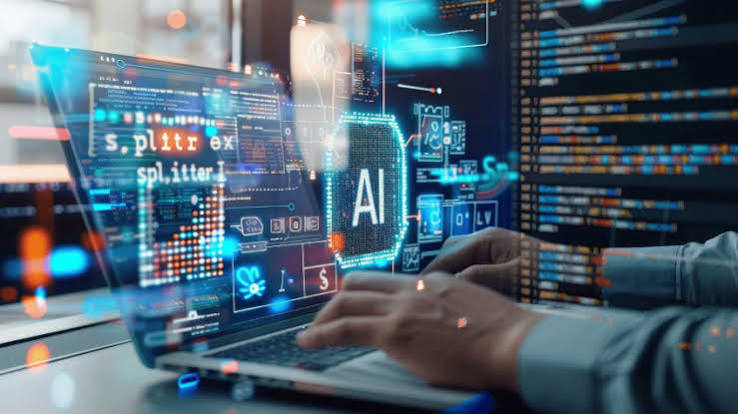

Autonomous agents now refactor legacy codebases while developers sip coffee, reviewing pull requests generated overnight by systems that reason across entire repositories rather than single files. Static typing debates have quieted, replaced by arguments over which AI pair-programmer best understands your team’s architecture. Edge inference chips ship inside everyday devices, pushing model weights closer to the user and further from the data center that once seemed unavoidable.
Kubernetes clusters orchestrate themselves with predictive autoscaling, anticipating traffic spikes before dashboards even blink red. Rust adoption climbs steadily in systems once dominated by C++, valued for memory safety in an era where a single vulnerability can cascade through thousands of interconnected microservices. Meanwhile, quantum-resistant cryptography moves from research papers into production libraries, quietly rewritten into the TLS handshakes securing tomorrow’s web traffic.
Open-source maintainers navigate a landscape where AI-generated contributions outnumber human ones, prompting new norms around code provenance and attribution. WebAssembly runs increasingly outside the browser, powering serverless functions and plugin ecosystems that once required native binaries. Low-code platforms mature enough that citizen developers ship internal tools once reserved for engineering teams, while senior engineers pivot toward orchestrating systems of systems rather than writing every line themselves.
Data pipelines lean on vector databases as a default primitive, not a novelty, feeding retrieval-augmented applications that reason over private knowledge bases in real time. Developer experience becomes a boardroom metric, measured alongside deployment frequency and incident recovery time. Somewhere, a junior engineer debugs a race condition at 2 a.m., a ritual that no amount of tooling has managed to fully automate — and perhaps never will.